
Are Our Personalities Determined By Genetics in the Womb?

At conception, genetics determine a number of things, such as our hair/eye color, sex, and blood type. But what about our personalities? Are our personalities determined by genetics in the womb or shaped by life experiences? Let’s explore this topic. Temperament & Genetics
Temperament refers to one’s tendency to be
4 Common Choice Arguments (Part 3)

Do you believe in protecting the lives of the unborn but struggle with articulating your arguments? Here are a few common choice arguments and our responses: Abortion Is Healthcare. Merriam-Webster Dictionary defines healthcare as the “efforts made to maintain, restore, or promote someone’s physical, mental, or emotional well-being especially when performed by trained and licensed professionals.” Choice proponents insist that this includes abortion. However, abortion does not “maintain, restore, or promote” anyone’s health and well-being.
5 Common Choice Arguments (Part 2)

Last month, we shared a few of the most common choice arguments we’ve encountered in our advocacy for the unborn. Let’s break down a few more of these arguments and share our responses. Many choice proponents believe that life begins at viability, when a fetus can survive outside the womb. Does viability determine life though? What about the baby born prematurely who needs artificial support for a period of time? Has that child’s life not begun? What about an older child or adult who experiences a medical emergency or accident that temporarily requires life support? Do we, depending upon our health, go in and out of being “alive” and deemed worthy as hu
5 Common Choice Arguments

In the years we have advocated for the unborn, we have encountered many of the same talking points from choice proponents. Here are a few of the most common choice arguments and our responses: My Body, My Choice
A woman’s “reproductive rights” are central to most pro-choice arguments, including “my body, my choice.” Something to consider is that half the babies aborted are females who will develop uteruses. What about their bodily autonomy? A human is a human from conception, so each individual—with or without a uterus—has a right to bodily autonomy. When a woman chooses abortion, she is not exercising control over her own body but control over another’s body—control that results in that person’s death. Therefore, the “my body, my choice” sentiment is inaccurate and misleading when there are really two separate bodies involved. We should not punish women who find themselves in an unintended pregnancy. We should provide a full generous spectrum of resources. However, the position of valuing one human life over another is the very basis of oppression throughout the world. Every human life has intrinsic value. When we start to put people in categories, we are all eventually put at risk.
3 Ways to Advocate for the Unborn

Every life has intrinsic value and should be protected on the basis of core humanity. We must be voices for the voiceless. Here are a few ways you can advocate for the unborn. We live in a media-oriented society, but it is still our family and friends that influence us the most. Don’t forget your voice and impact! People’s beliefs direct their individual decisions regarding abortion, and attitudes undergird legislation that protects lives. The only way to change hearts and minds is to keep the conversation going! Talk to your family and friends about the risks associated with abortion and present scientific research regarding life at conception. Share the fetal development information and ultrasound videos from www.youranswermatters.org. With social media, we can also connect with people across the country and globe. Contribute to discussion forums on the topic of abortion, engage with social media posts about abortion and new legislation, and share relevant posts/articles to keep the people in your network informed. Furthermore, share resources that may benefit women and couples who are faced with unintended pregnancies.
Fetal Heartbeat: Is it Real and When Does It Begin?

Recently some have questioned the long standing definition of a fetal heartbeat in early pregnancy. Choice advocates insist that the “fetal heartbeat” found in early pregnancy is nothing more than an electrical pulse that mimics the rhythm of a heartbeat. What do scientists say about this? According to the esteemed Mayo Clinic, “during the first six weeks of pregnancy, the baby’s heart begins to form and starts to beat. The major blood vessels that go to and from the heart also begin to form during this critical time.” This is the embryo’s first functioning organ and supports its body in a number of ways. An embryo’s developing heart will carry oxygenated blood and nutrients throughout its body via heartbeat to sustain life while in utero. There is an overwhelming consensus that the heart begins beating around 5-6 weeks
Low Birth Rates Across the World

Fertility rates have always varied across countries and cultures. For decades, many nations valued starting and expanding families. However, in recent years many nations have seen a decrease in fertility rates. Why is this? What are the negative effects of rapidly declining fertility rates?
Population growth supports economic growth; if fewer people are reproducing, our economy suffers. An aging population makes government services less accessible, as these programs are no longer fiscally sustainable. Furthermore, low fertility rates impact workforce participation. An inadequate workforce makes the cost of living increase, which means the standard of living declines for the majority of the population. An aging population also impacts innovation, as there are fewer researchers, scientists, and inventors generating new ideas and discoveries.
In terms of maintaining a society, we look at a population’s replacement rate—the number of children
Groups Targeted by Eugenics

At its core, abortion is oppressive and discriminatory, as it is often used to terminate those deemed “unworthy” of life. For instance, individuals with Down Syndrome are often victims of abortion because of their perceived “quality of life.” The black community is also disproportionately affected by abortion. Let’s explore why: Down Syndrome, or Trisomy 21, is a genetic condition in which the baby has an extra chromosome. This extra chromosome results in physical abnormalities, developmental challenges, and some medical problems like congenital heart defects. However, these birth defects do not always limit one’s ability to live a full, independent life. By age 31, 34% of people with Down Syndrome live independently and 57% work paid jobs. Today, people with Down Syndrome has an average life expectancy of 60 years. However, this does not stop women and couples from aborting babies with Down Syndrome diagnoses. According to the Joint Economic Committee, 60 to 90% of all babies diagnosed with Down Syndrome are aborted in the United States. In Iceland, almost 100% of women who receive a fetal Down Syndrome diagnosis go on to abort their babies. These disturbingly high rates of abortion could be attributed to increased prenatal testing and the fear many have about navigating their child’s developmental and medical issues in the future. Regardless, we have normalized eradicating an entire population of people—who would likely go on to lead happy, productive lives—due to fear and convenience.
Adoption Over the Years

Social issues and legislation have greatly impacted adoption rates over the years. Historically, adoption has been a wonderful option for women in unplanned pregnancies, provided stable families for their babies, and enriched the lives of adoptive families. Adoptions rose from 91,000 in 1957 to 175,000 in 1970. Before the legalization of abortion, 9% of babies born to never-married women under 45 were placed for adoption. After abortion was legalized, adoption became less prevalent among women who did not wish to parent. There was a decline to 130,000 in 1975 following the landmark Roe v Wade decision in 1973. By the 1980s, only 2% of babies born to never-married women under 45 were placed for adoption — an
Postpartum Care Tips
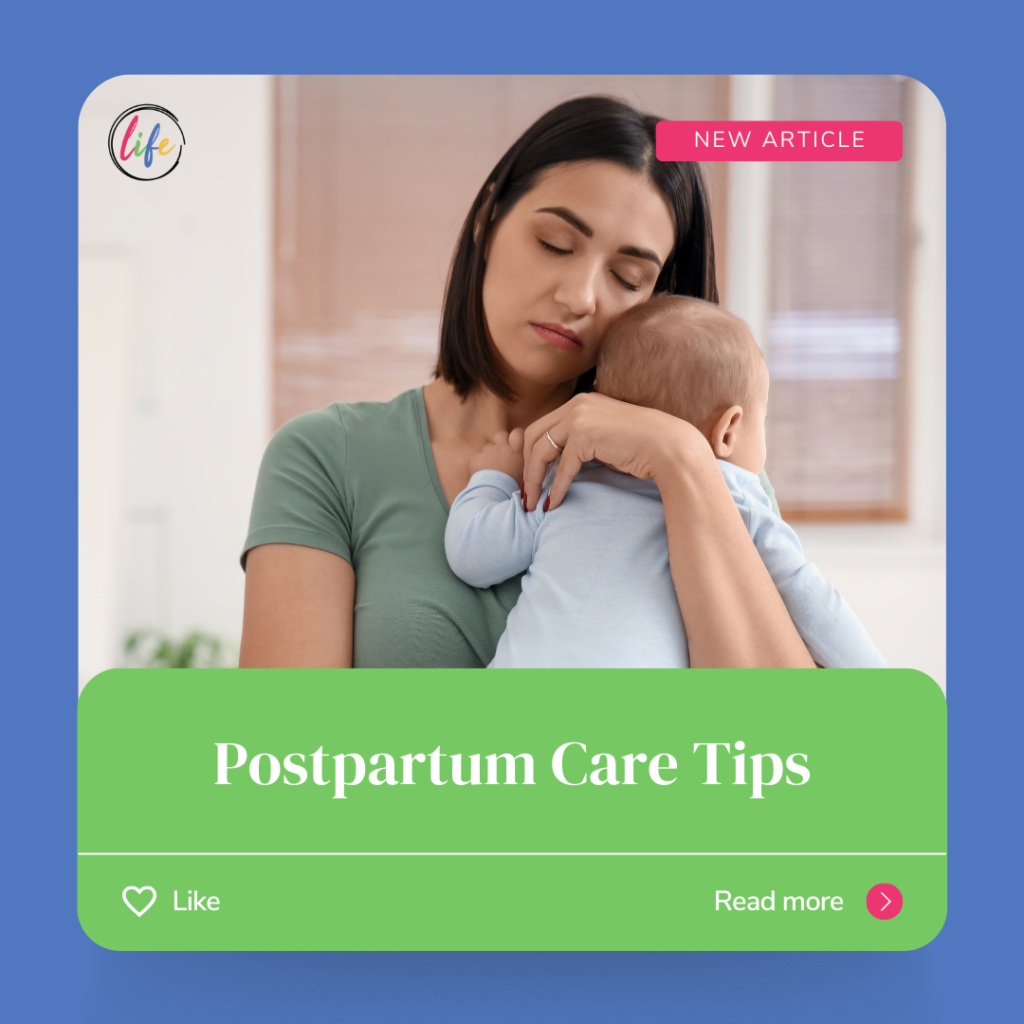
A woman’s body is capable of creating and nurturing life. Once she has birthed her baby, a woman often goes through an intense recovery process, as hormones stabilize and her body heals. Here are a few postpartum care tips for a quick, easy recovery. As you adjust to having a new baby in the house and tend to their needs, you may not have much time to dedicate to food preparation. However, nourishing your body postpartum is crucial in maintaining your physical/mental health and supporting your milk supply. Ensure you’re getting all the necessary vitamins and nutrients by preparing healthy meals in the weeks leading up to delivery and freezing these meals. Once your baby has arrived, all you’ll have to do is pull a meal out of the freezer and reheat it. If you’re afraid you’ll get busy and forget to eat, set reminders for yourself. You can’t be the best Mom you can be if you’re not taking care of yourself first!