
Fetal Development in the Third Trimester
By the third trimester, your baby is already so developed — but still requires a little more time and nourishment for all its organs to be fully functional. Here’s a weekly breakdown of fetal development in the third trimester: Week 27 (25 weeks following conception): The third trimester starts off strong, as the fetus can now open and blink its eyes. Eyelashes grow and frame its newly pigmented eyes! Week 28 (26 weeks following conception): The fetus is now preparing for its grand arrival, as it begins turning head-down. The fetus may be startled by loud noises and even cry within the womb. At this point, the fetus weighs 2-3 pounds. Week 29 (27 weeks following conception): As the fetus continues growing and developing, you may feel more movement within the womb. It’s a tight squeeze and they’re still kicking and grasping. Week 30 (28 weeks following concept
Fetal Development in the Second Trimester
By 12 weeks in utero, a baby has already grown so much! The fetus is 2.5 to 3 inches long — about the size of a plum. At this stage of growth, they have a detectable heartbeat and brainwaves, as well as distinguishable features, genitals, and fingernails. This is just the beginning! Here’s a weekly breakdown of fetal development in the second trimester. Please note that physicians mark “pregnancy” as beginning from the first day of the woman’s last menstrual period. The woman is not actually pregnant during these first two weeks. Conception — actual pregnancy when the egg is fertilized — generally occurs sometime within the 2 weeks following the first day of the woman’s last menstrual period. Medical developmental terminology is noted in this article for easy reference to medical literature. However, the actual gestational age of the fetus from conception is then used. Week 14 (12 weeks following conception): The fetus’ external genitals are fully developed and the sex of the baby is quite apparent. Skin begins to thicken, hair grows along the body, and mobility improves as the fetus begins moving its hands and head.
Fetal Development in the First Trimester
A fetus is a human being from the moment of conception. From conception, they have already begun growing and developing! Here’s a weekly breakdown of fetal development in the first trimester: Weeks 1 & 2: During the first two weeks of a woman’s pregnancy, she’s not actually pregnant! She menstruates to prepare her uterus for a pregnancy. About two weeks later, she ovulates as her ovaries release a fertile egg into the fallopian tubes. Week 3: In week 3, the sperm travels up the fallopian tubes and fertilizes the egg. The resulting single-celled zygote is the earliest stage of growth for the developing human being. From the moment of conception until birth nothing further genetically will be added. From the moment of conception DNA will not only identify the beginning human as a human but will identify that specific human being from that point forward. Our physical characteristics — eye, skin and hair color, sex, etc — are already determined. According to research from twin and adoption studies, even our pers
Should There Be Exceptions to Abortion Bans?
Many people believe abortion should be illegal—with some exceptions. These exceptions include fetal abnormalities, rape, health/life of the mother, etc. Let’s break down each of these exceptions and whether they are valid reasons for abortion: Choice advocates believe that fetal abnormalities are justification for abortion. They believe that abortion is the best option because many birth defects can later affect the child’s quality of life. They believe abortion is a “mercy”. Who has the authority to decide if one’s life is or isn’t worth living? Our nation’s body of law is all about establishing universal, objective human rights that are not subject to the whims of bureaucrats, parents, or any other subjective decision maker. Human beings have a Right of Life. We are not entitled to interfere and we do not justify the taking of an innocent life in any other context. Babies with fatal birth defects deserve a dignified,
Is Abortion Healthcare
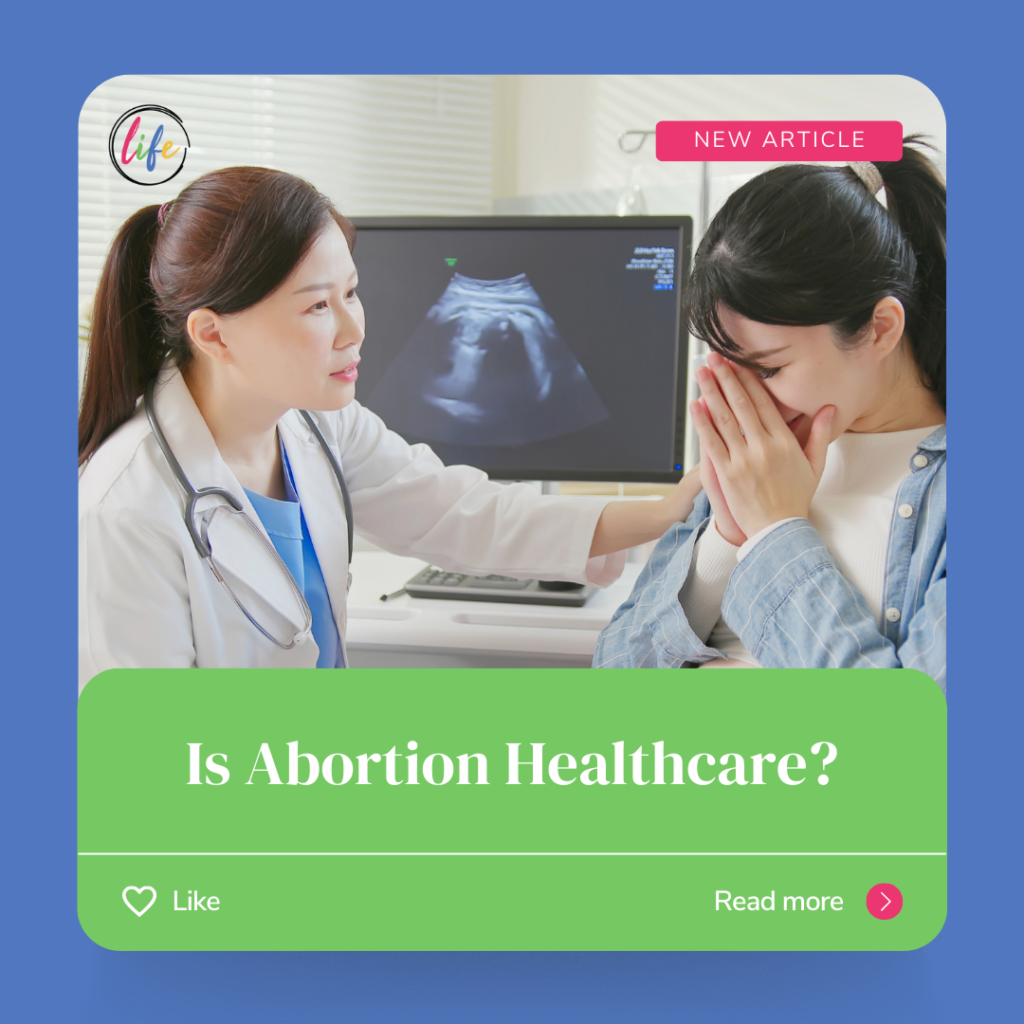
Choice proponents believe women have a right to abortion because it is an essential healthcare procedure. Is abortion healthcare? To answer this question, we must define “healthcare” and take a closer look at abortion’s role in healthcare: Defining “healthcare” The Merriam-Webster Dictionary defines “healthcare” as the “efforts made to maintain, restore, or promote someone’s physical, mental, or emotional well-being especially when performed by trained and licensed professionals.” Does abortion maintain or restore one’s overall health? Let’s dissect this!
POST-ABORTIVE REGRET STATISTICS

Choice advocates assert that in the event of an unintended pregnancy, abortion is often the “right decision”. If abortion is “right”, then why do so many women struggle with severe mental health issues and post-abortive regret for years after terminating their pregnancies? Here are a few statistics that point to the despairing reality of so many post-abortive women: Post-Abortive Regret Statistics – When Does Life Begin?Post-Abortive Outcomes
Abortion is often labeled as an empowering “reproductive right” — a way for women to own their bodies and reproductive health. However, if abortion is so empowering, then why do so many women report feeling coerced into getting an abortion? In a recent study by the Charlotte Lozier Institute, 60% of post-abortive women reported feeling coerced into terminating their pregnancies and later experienced a decline in their mental health and overall quality of life. These women reported experiencing sadness and grief, intrusive thoughts and flashbacks, high levels of stress when discussing their abortions, interference in their professional and personal lives, etc.
Similar results were reported in, Women Who Suffered Emotionally from Abortion: A Qualitative Synthesis of Their Experiences. The article is published in the Journal of American Physicians and Surgeons Volume 22 Number 4 Winter 2017.
4 UNPLANNED PREGNANCY OPTIONS

An unplanned pregnancy is financially, physically, and emotionally stressful. Fear often drives women and couples to choose abortion. However, there are safe alternatives to abortion that benefit everyone, including the unborn. Here are 4 unplanned pregnancy options:Once the initial fear and anxiety subside, many women and couples decide they want to raise their babies. For parents raising their children, there are many resources available. For couples who live together, raising a baby is a team effort. For parents living separately, co-parenting and joint-custody arrangements can be made in and outside of the courtroom. When parents aren’t always seeing eye-to-eye, legal mediation can be pursued to assign financial responsibilities, like child support.
As of 2021, there are approximately 3,000 crisis pregnancy center locations in the U.S. (counting medical mobile units as separate locations). They provide a wide range of pregnancy care and after-birth care. Pregnancy centers now routinely provide assistance for 2-3 years following the birth of a child. These include material support like diapers and formula, along with assistance with school and training plans, parenting classes, etc. Additionally, there are many government-funded programs, churches, and other social service agencies providing assistance. For example, Texas has a generous Alternatives to Abortion fund.
FETAL RIGHTS: WHAT DOES THE CONSTITUTION SAY?

Does a fetus have rights? If so, do these rights supersede those of its mother? Let’s break down what the constitution has to say about fetal rights:The Right to Life
The Constitution outlines the rights we have as citizens and persons in the United States of America, one of which includes the Right to Life.The Right to Life was the first right enumerated in the Declaration of Independence and is reaffirmed explicitly in the 14th amendment to the Constitution. The 14th amendment reads as follows: “…nor shall any state deprive any person of life, liberty, or property, without due process of law; nor deny to any person within its jurisdiction the equal protection of the laws.”
WHAT IS BODILY AUTONOMY?

Choice advocates are adamant that illegalizing abortion violates a woman’s bodily autonomy. What is “bodily autonomy”? Does this concept hold up in the case of terminating an unintended pregnancy? Let’s break down this concept as it relates to pregnancy and abortion: Defining Autonomy The Merriam-Webster Dictionary defines “autonomy” as “the quality or state of being self-governing.” What is Bodily Autonomy? – When Does Life Begin?
Everyone has the right to exercise control over their own bodies and lives. Personal freedom is one of the many perks of living in a democratic society.
With the right to self-govern, women have the freedom to choose whether they want to have consensual sex or remain celibate. They have the freedom to make reproductive decisions.
IS A FETUS A PERSON?

Choice advocates often pose the question, “Is a fetus a person?” The “personhood” argument asserts that a fetus’ life does not hold the same value as the lives of those living outside the womb, simply because the fetus relies on its mother for survival. This couldn’t be further from the truth! Valuing one life over another is the very basis of oppression. Let’s break down the discrepancies in the “personhood” argument:What is a Person?
Before we can analyze “personhood”, we must first define what a “person” is. The Oxford English Dictionary defines “person” as “an individual human being; a man, woman, or child.” Here’s what we know about fetuses:
1) When a human woman and a human man sexually reproduce, they are only capable of creating one thing: a human fetus. Fetuses are genetic human beings.
2) Though they rely on their mothers for survival until they reach medical viability at about 22-24 weeks in utero, fetuses are individuals from conception. At conception the sperm and egg unite to form a new, unique human being with its own separate DNA. The DNA genetic code will not only identify the new person as a “human” but will identify that specific human from conception on.